Insights

Engineering Notes

Practical notes on .NET architecture, Azure/AWS cloud delivery, AI integration, Blazor, Delphi modernization, relational databases, secure APIs, agentic development, and career-focused engineering habits.

.NET ArchitectureAzure / AWSAI IntegrationAgentic DevelopmentBlazorDelphiSQL ServerModernization
I started writing software before Stack Overflow existed.
• 2 min read

I started writing software before Stack Overflow existed.

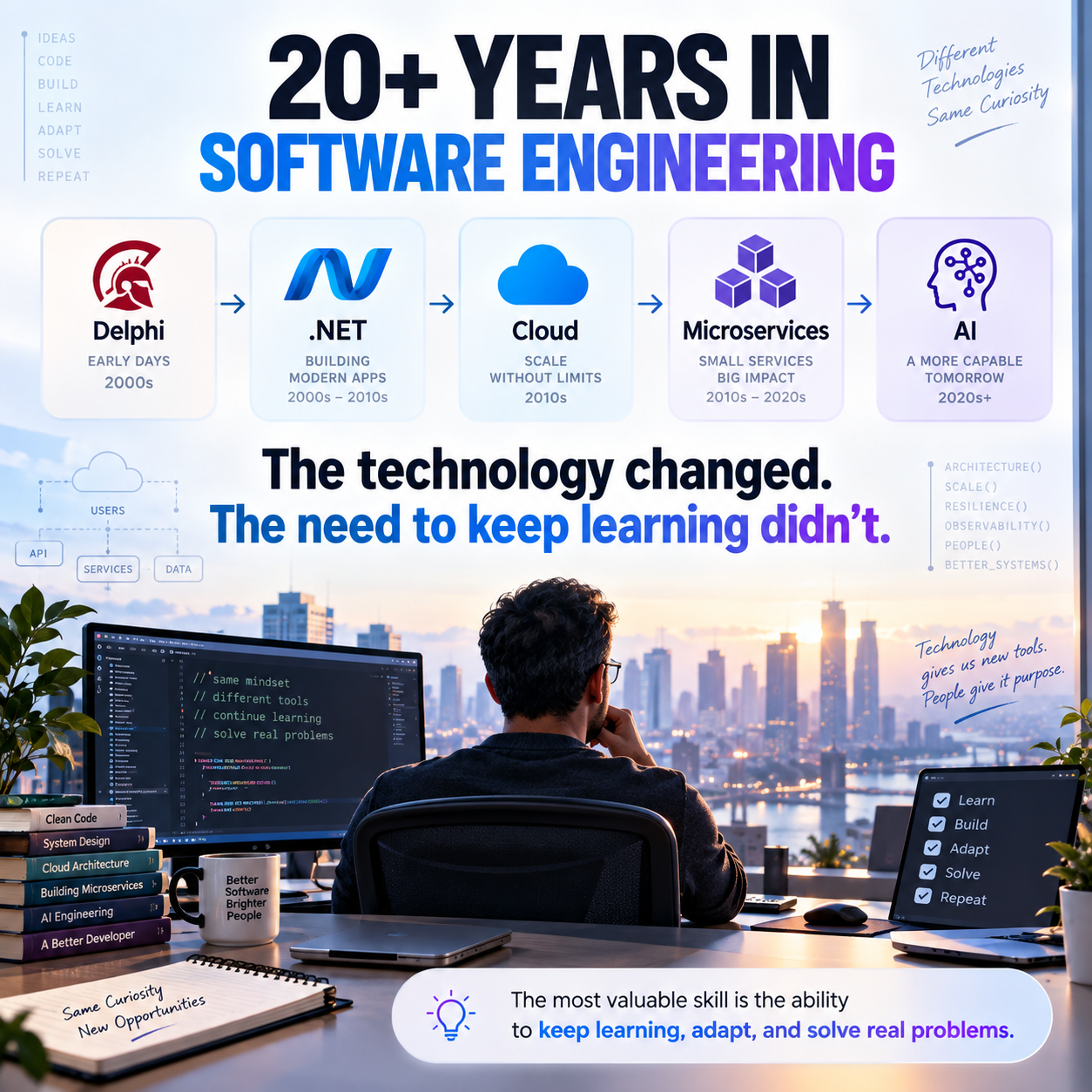
20+ years in software engineering taught me one thing: technologies will keep changing, but the ability to **learn, adapt, and solve real problems** never loses value. From Delphi to .NET, cloud, microservices, and now AI—the tools evolve, but strong engineering fundamentals remain.

SoftwareEngineeringSoftwareArchitectureDotNet
AI can write code in seconds...
• 2 min read

AI can write code in seconds...

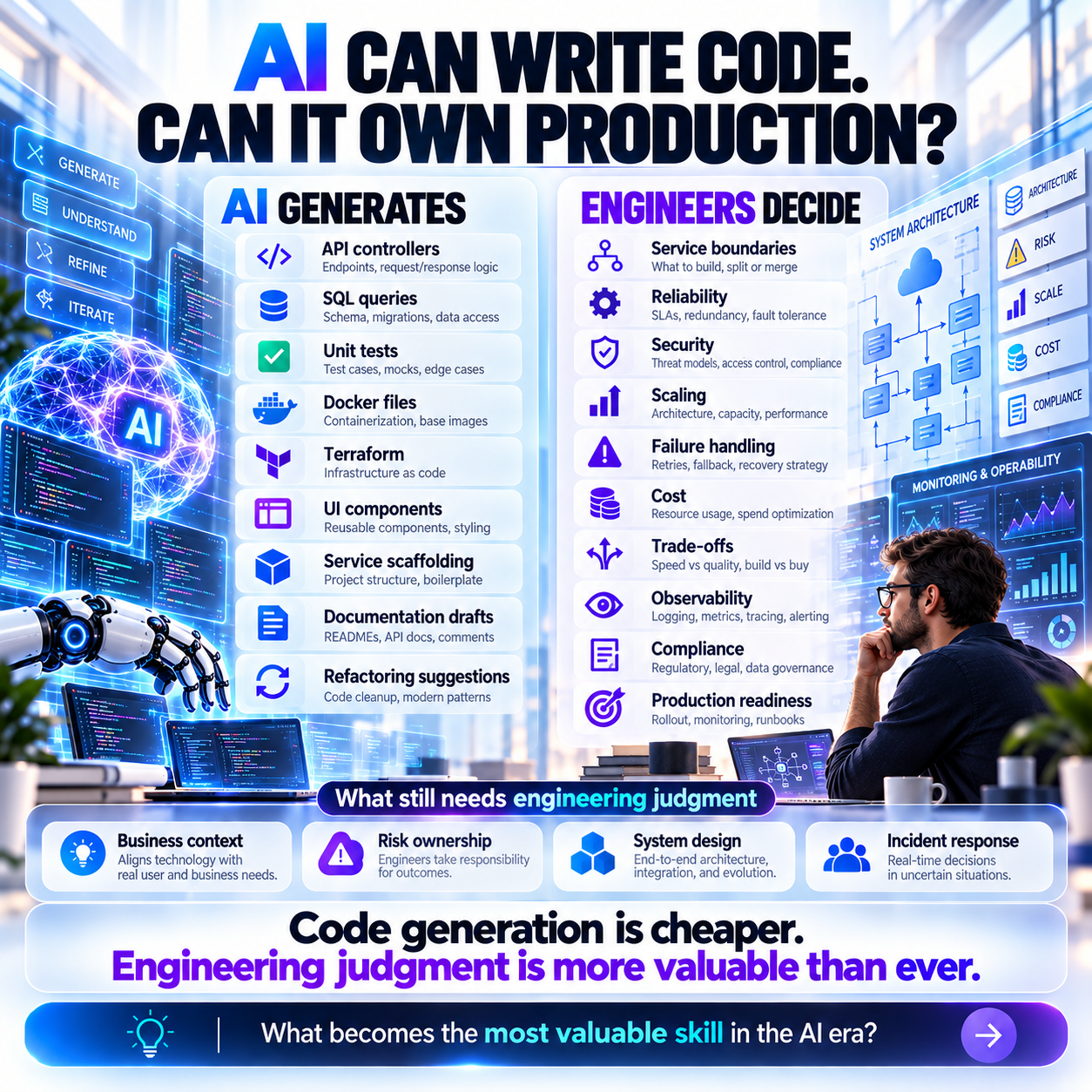
AI is making code generation faster and cheaper, but production systems still depend on human judgment. The real value of senior engineers is increasingly in architecture, reliability, security, trade-offs, and taking responsibility for the system as a whole.

ArtificialIntelligenceAISoftwareArchitecture
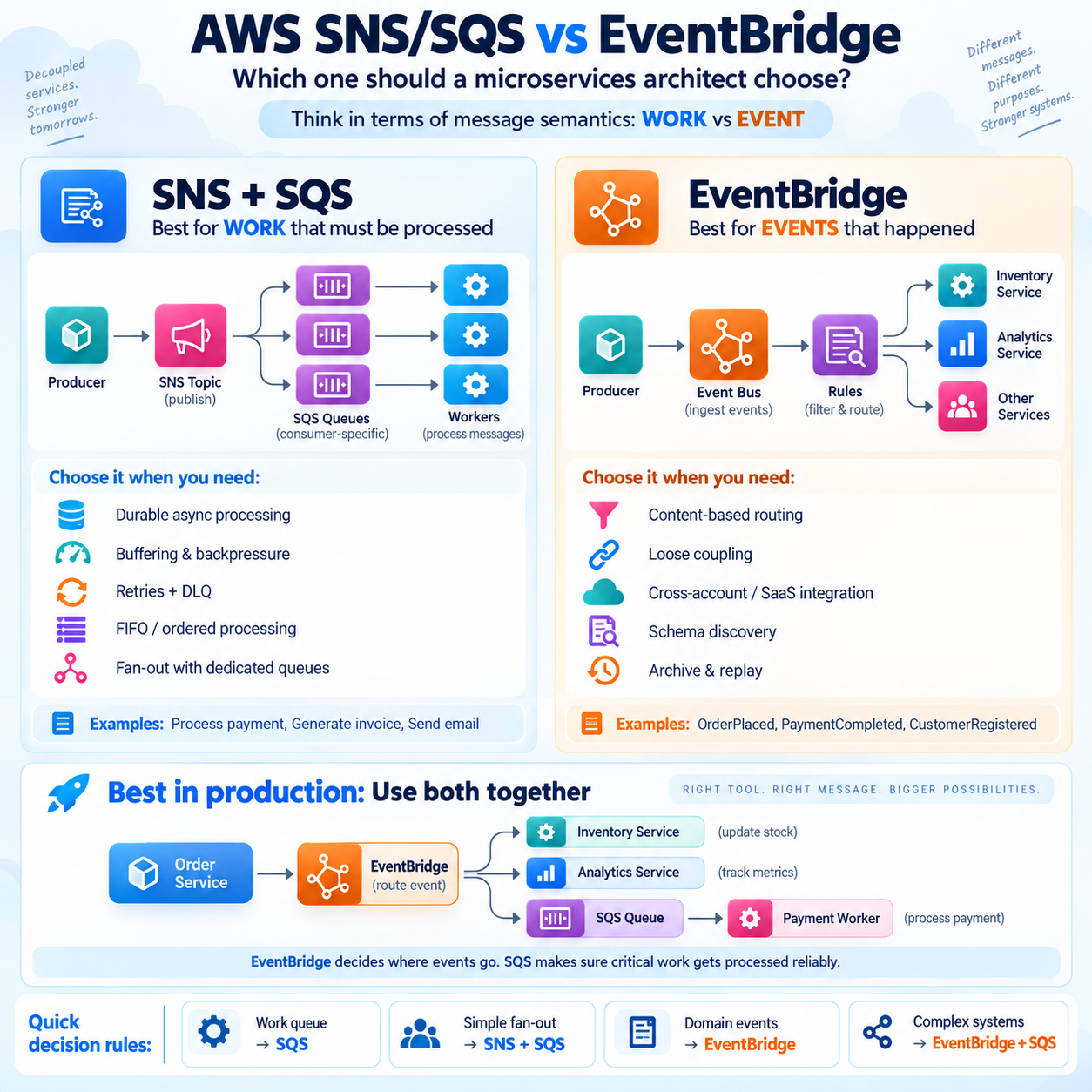
AWS SNS/SQS vs EventBridge: The Choice Every Microservices Architect Has to Make
• 2 min read

AWS SNS/SQS vs EventBridge: The Choice Every Microservices Architect Has to Make

In AWS microservices architecture, SNS/SQS and EventBridge solve different messaging problems. SNS/SQS is ideal for reliable asynchronous work, buffering, retries, and fan-out, while EventBridge is better for loosely coupled domain events and intelligent event routing—and in many production systems, the strongest architecture uses both together.

MicroservicesAWSEventDrivenArchitecture
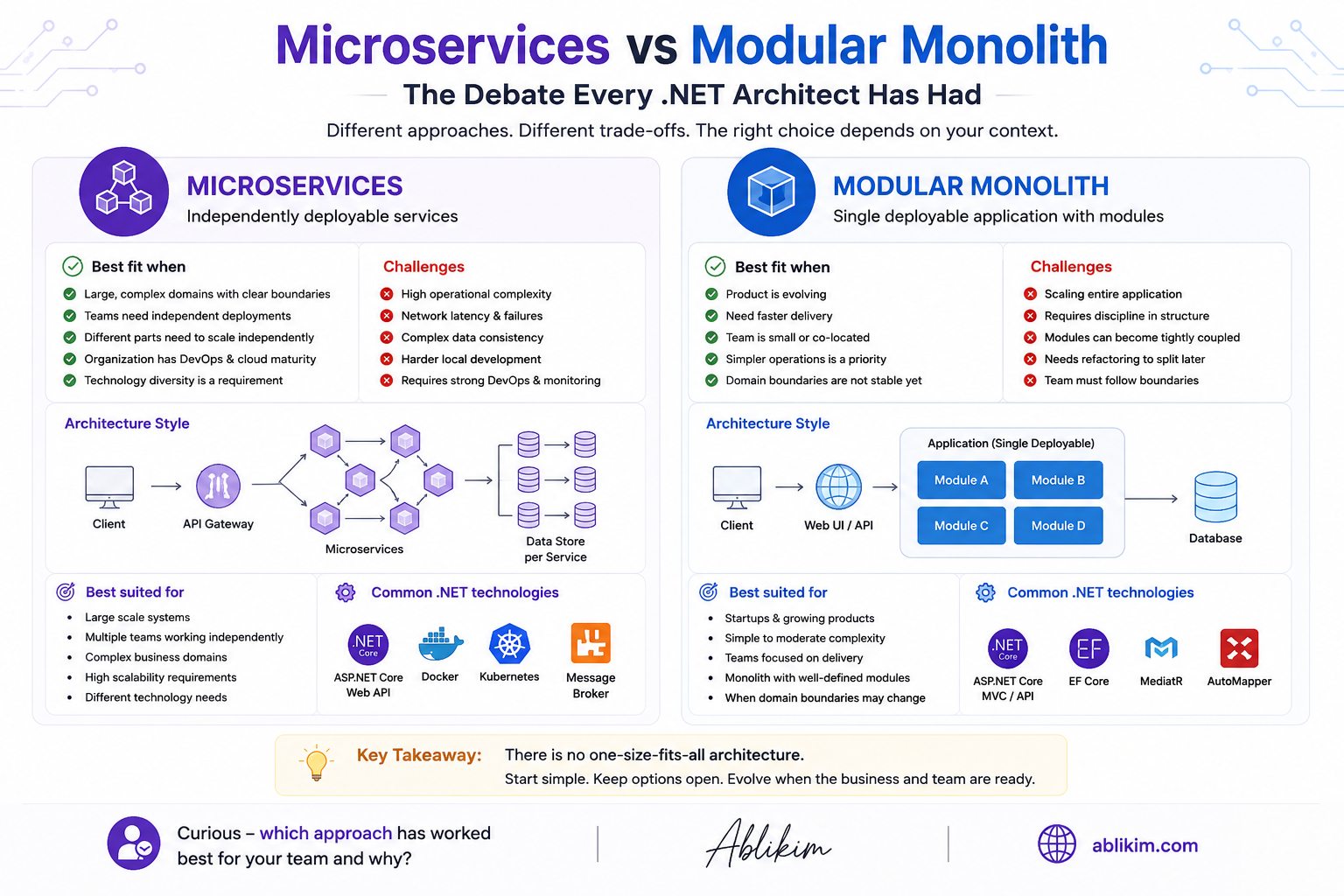
Should we build microservices, or should we keep it as a modular monolith?
• 2 min read

Should we build microservices, or should we keep it as a modular monolith?

Microservices offer independent scaling and deployment, while a modular monolith keeps operations simpler and development faster. The right choice depends on your team maturity, domain complexity, and how quickly the system needs to evolve.

csharpmicroservicesmodularmonolith
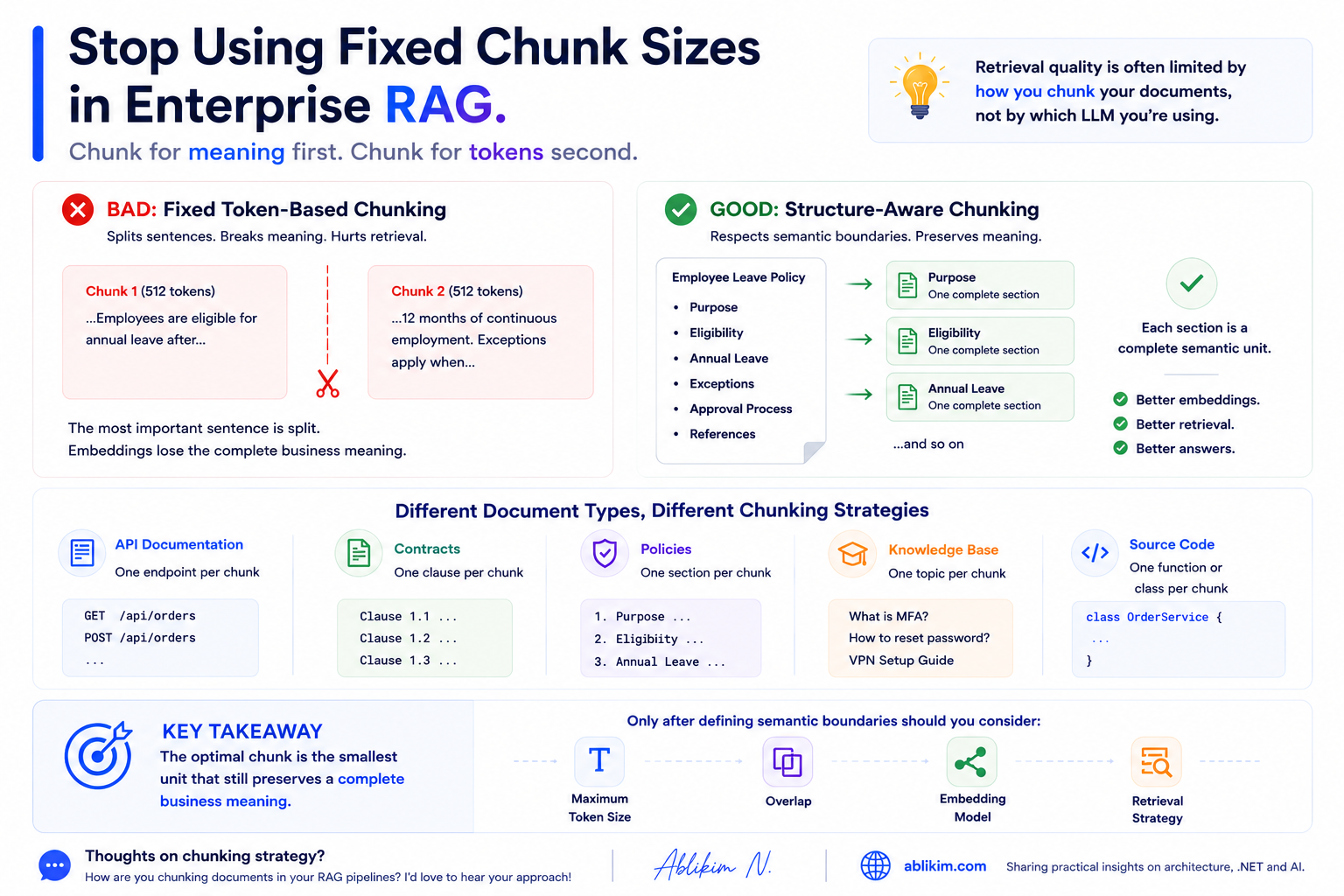
Stop Using Fixed Chunk Sizes in Enterprise RAG.
• 2 min read

Stop Using Fixed Chunk Sizes in Enterprise RAG.

Most RAG tutorials recommend a fixed chunk size, such as 512 tokens with 128-token overlap. In production, that approach often breaks business context and reduces retrieval quality. I prefer semantic chunking—splitting documents by logical sections such as policy rules, API endpoints, contract clauses, or code functions. Each chunk should represent one complete business concept.

AzureAIRAGAzureAISearch
If Entity Framework can execute raw SQL, why does Dapper still exist?
• 3 min read

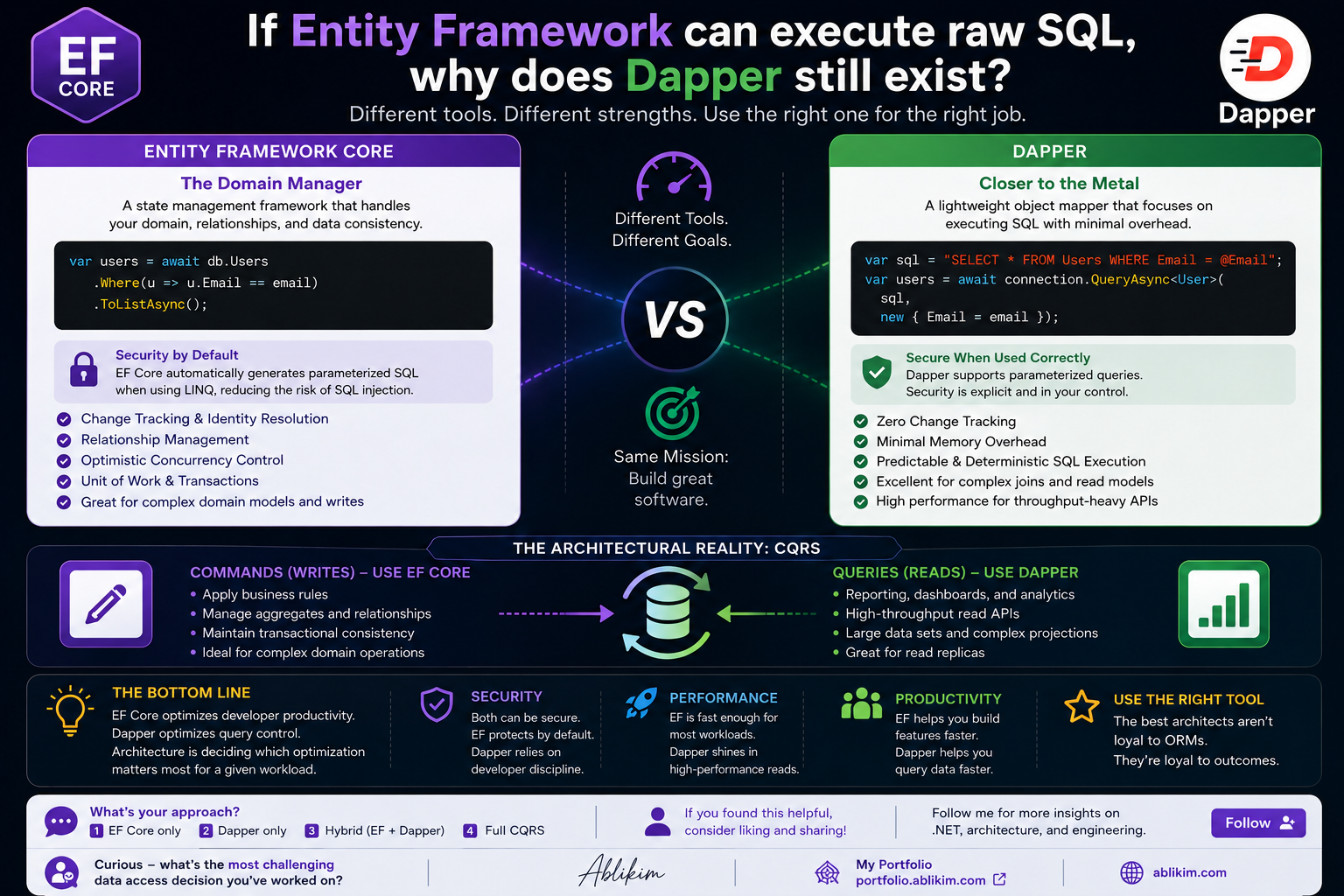
If Entity Framework can execute raw SQL, why does Dapper still exist?

.NET Architect with 20+ years of experience building scalable, high-performance systems using C#, .NET, and modern cloud-native architectures. Focused on clean architecture, microservices, and pragmatic engineering decisions that balance productivity, maintainability, and performance. Passionate about modern data access patterns (EF Core, Dapper, CQRS) and building systems that scale in real-world production environments.

efdapper
EF Core vs Dapper: The Debate Every .NET Developer Has Had
• 2 min read

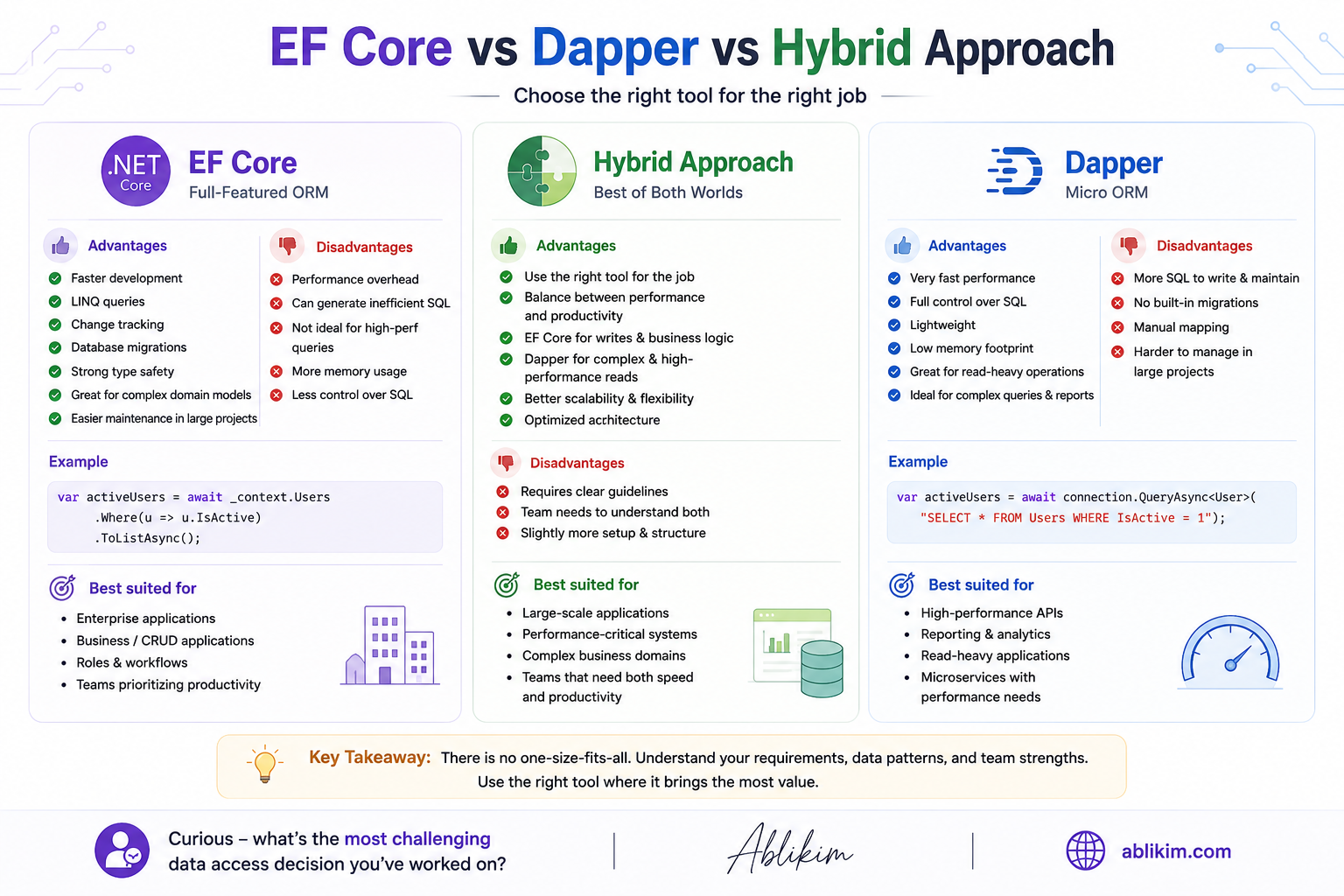
EF Core vs Dapper: The Debate Every .NET Developer Has Had

One question I often hear from developers:"Should I use EF Core or Dapper. "After working on enterprise applications, APIs, and data-intensive systems, my answer is:👉 It depends on your requirements.

EFDapperDOTNET